IMF Executive Board Completes Second Review under the Extended Credit Facility, and Approves US$35.5 Million Disbursement for Togo
IMF News, June 15, 2018
Source details
- Canonical URL
- IMF Executive Board Completes Second Review under the Extended Credit Facility, and Approves US$35.5 Million Disbursement for Togo
Other formats
Bibliographic details
- Published: June 15, 2018
Review outcome and disbursement
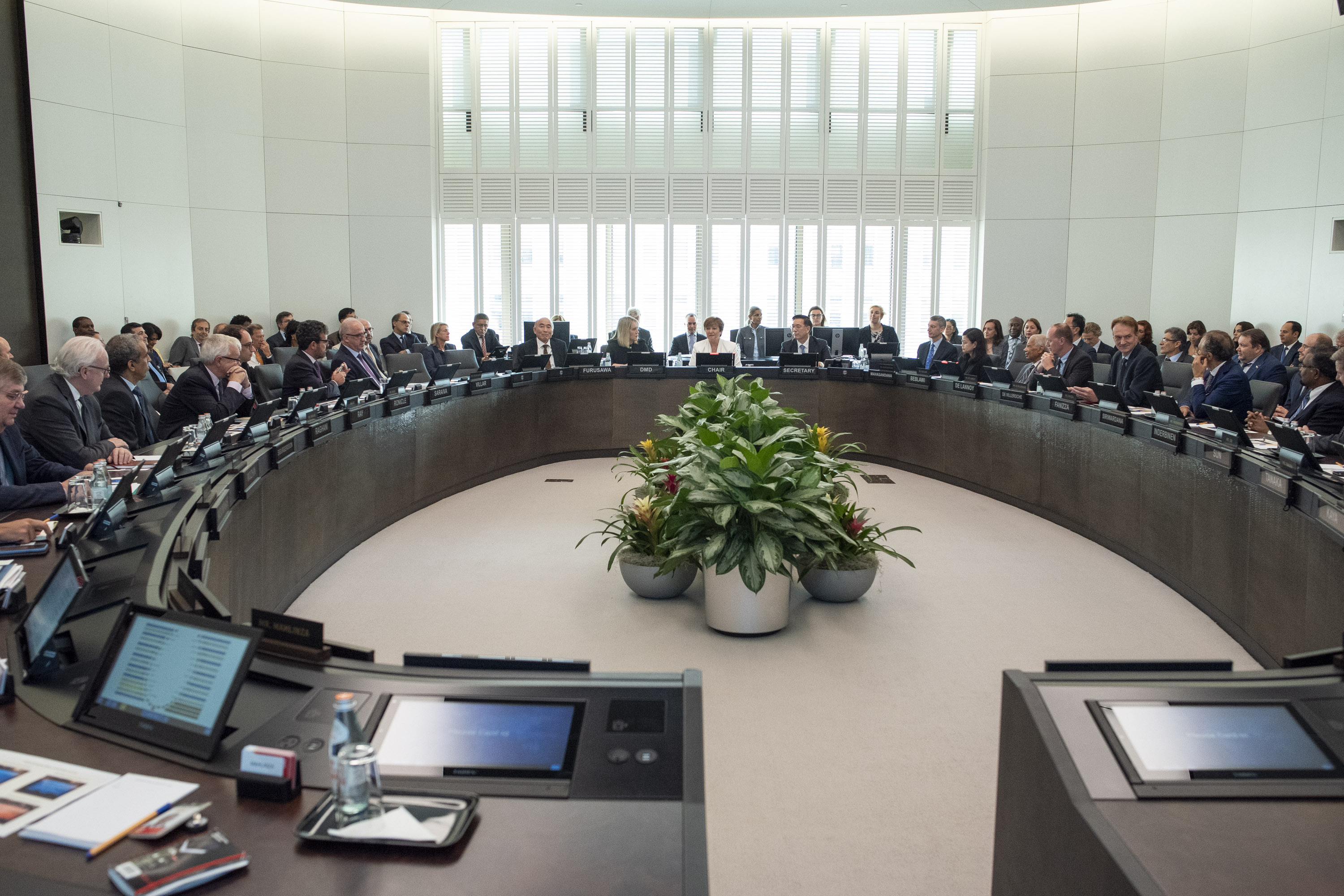
- On June 15, 2018 the Executive Board completed the second review of Togo’s program supported by an Extended Credit Facility (ECF) arrangement.
- Completion of the review enables the disbursement of SDR25.17 million (about US$35.5 million).
- Total disbursements under the arrangement to date: SDR75.51 million (about US$106.5 million).
- The Executive Board granted a modification of three performance criteria.
- Togo’s three-year arrangement was approved on May 5, 2017 for SDR176.16 million (120 percent of quota or about US$241.5 million at the time of approval).
Program objectives and implementation
- Program aims:
- Reduce the overall fiscal deficit substantially upfront to ensure long-term debt and external sustainability.
- Refocus policies on sustainable and inclusive growth through targeted social spending and sustainably-financed infrastructure spending.
- Resolve the financial weaknesses in the two public banks.
- Program implementation assessment:
- Program performance has been good, despite weakening economic activity due to continuing socio-political tensions.
- Fiscal position improved significantly, driven mainly by expenditure reduction.
- Public debt has declined.
Key policy messages and recommended actions (from Mr. Mitsuhiro Furusawa)
- Maintain strong commitment to the program and reform momentum to:
- Preserve macroeconomic stability.
- Improve social protection.
- Safeguard long-term debt sustainability.
- Boost the country’s growth potential.
- Fiscal policy priorities:
- Continue to focus on reducing public debt and preserving fiscal sustainability.
- Pursue reforms to address weak revenue collection.
- Prevent new arrears.
- Improve the cost-effectiveness of public investment projects.
- Contain public expenditure.
- Public debt and debt management:
- Authorities are undertaking a review of expenditure to improve efficiency.
- Measures to improve public debt management have started to be implemented.
- Ensuring debt reduction remains key for macroeconomic stability.
- Financial sector reforms:
- Restructuring of the two public banks is important, including adequate recapitalization, addressing non-performing loans, and strengthening governance to restore financial stability.
- Regional and structural reforms:
- Continue progress toward adherence to the WAEMU convergence criteria to help maintain strong regional reserves.
- Finalization of the National Development Plan and Togo’s admission to the Compact with Africa are commendable.
- Swift and decisive implementation of structural reforms in those policy documents, consistent with the ECF-supported program, would help achieve stronger and more inclusive growth.
Selected economic and financial indicators (highlights from Table 1, 2015–23)
- Real GDP (percentage change): 2015: 5.7; 2016: 5.1; 2017: 4.4; 2018 (Est.): 4.7; 2019 (Proj.): 5.0; 2020 (Proj.): 5.3; 2021 (Proj.): 5.4.
- Real GDP per capita (percentage change): 2015: 3.1; 2016: 2.5; 2017: 1.8; 2018 (Est.): 2.1; 2019 (Proj.): 2.4; 2020 (Proj.): 2.7; 2021 (Proj.): 2.8.
- GDP deflator (percentage change): 2015: 3.5; 2016: 0.4; 2017: 1.9; 2018 (Est.): 2.3; 2019 (Proj.): 3.0.
- Consumer price index (average) (percentage change): 2015: 0.9; 2016: -0.7; 2017: 1.2; 2018 (Est.): 2.0.
- GDP (CFAF billions): 2015: 2,472; 2016: 2,643; 2017: 2,769; 2018 (Est.): 2,958; 2019 (Proj.): 3,180; 2020 (Proj.): 3,449; 2021 (Proj.): 3,744; 2022 (Proj.): 4,065; 2023 (Proj.): 4,413.
- Exchange rate CFAF/US$ (annual average level): 2015: 591.2; 2016: 592.8; 2017: 580.9.
- Real effective exchange rate (appreciation = –): 2015: 7.1; 2016: -1.1; 2017: 1.6.
- Terms of trade (deterioration = –) (percentage change): 2015: 6.9; 2016: -3.3; 2017: -1.7; 2018 (Est.): 0.5; 2019 (Proj.): 1.0.
- Monetary survey (percentage change of beginning-of-period broad money):
- Net foreign assets: 2015: -3.6; 2016: -2.0; 2017: 0.0.
- Net credit to government: 2015: -2.1; 2016: -2.3; 2017: 9.4; 2018 (Est.): -13.9.
- Credit to nongovernment sector: 2015: 13.2; 2016: 10.1; 2017: -1.5; 2018 (Est.): 8.5; 2019 (Proj.): 9.5; 2020 (Proj.): 10.8; 2021 (Proj.): 11.4; 2022 (Proj.): 12.0; 2023 (Proj.): 13.8.
- Broad money (M2): 2015: 20.6; 2016: 12.6; 2017: 8.3; 2018 (Est.): 6.8; 2019 (Proj.): 7.5; 2020 (Proj.): 8.6; 2021 (Proj.): 12.4.
- Velocity (GDP/end-of-period M2): 2015: 1.7.
- Investment and savings (percent of GDP):
- Gross domestic investment: 2015: 33.7; 2016: 33.8; 2017: 25.3; 2018 (Est.): 30.1; 2019 (Proj.): 27.7; 2020 (Proj.): 29.3; 2021 (Proj.): 30.3; 2022 (Proj.): 30.6; 2023 (Proj.): 30.8.
- Government investment (percent of GDP): 2015: 12.9; 2016: 13.9; 2017: 6.3; 2018 (Est.): 6.7; 2019 (Proj.): 7.2; 2020 (Proj.): 7.4.
- Nongovernment investment (percent of GDP): 2015: 20.8; 2016: 19.9; 2017: 19.0; 2018 (Est.): 20.0; 2019 (Proj.): 21.0; 2020 (Proj.): 22.5; 2021 (Proj.): 23.4.
- Gross national savings: 2015: 22.7; 2016: 24.4; 2017: 17.3; 2018 (Est.): 22.2; 2019 (Proj.): 20.9; 2020 (Proj.): 23.7; 2021 (Proj.): 25.7; 2022 (Proj.): 25.8.
- Government budget (percent of GDP):
- Total revenue and grants: 2015: 21.8; 2016: 21.6; 2017: 21.5; 2018 (Est.): 24.5; 2019 (Proj.): 23.8; 2020 (Proj.): 24.0; 2021 (Proj.): 24.3.
- Revenue: 2015: 19.5; 2016: 18.8; 2017: 20.5; 2018 (Est.): 20.2; 2019 (Proj.): 20.4.
- Total expenditure and net lending: 2015: 30.7; 2016: 31.2; 2017: 29.0; 2018 (Est.): 24.2; 2019 (Proj.): 24.1.
- Domestic primary balance1: 2015: -3.2; 2016: -4.5; 2017: 0.8; 2018 (Est.): 2.9.
- Overall primary balance (commitment basis, incl. grants): 2015: -6.5; 2016: -7.2; 2017: 1.5.
- Overall balance (commitment basis, incl. grants): 2015: -8.9; 2016: -9.6; 2017: -0.3; 2018 (Est.): -0.5; 2019 (Proj.): 0.2; 2020 (Proj.): -3.1.
- Overall primary balance (cash basis, incl. grants): 2015: -5.3; 2016: -4.3; 2017: -2.9.
- Overall balance (cash basis, incl. grants): 2015: -7.7; 2016: -6.7; 2017: -1.6.
- External sector (percent of GDP):
- Current account balance: 2015: -11.0; 2016: -9.3; 2017: -8.0; 2018 (Est.): -7.9; 2019 (Proj.): -6.8; 2020 (Proj.): -5.6; 2021 (Proj.): -5.0; 2022 (Proj.): -4.9.
- Exports (goods and services): 2015: 35.8; 2016: 33.4; 2017: 31.9; 2018 (Est.): 31.0.
- Imports (goods and services): 2015: -57.8; 2016: -53.2; 2017: -50.0; 2018 (Est.): -48.5; 2019 (Proj.): -46.7; 2020 (Proj.): -45.3; 2021 (Proj.): -44.6; 2022 (Proj.): -44.4.
- Public debt and debt service (percent of GDP unless indicated):
- External public debt2: 2015: 21.7; 2016: 23.0; 2017: 22.4.
- External public debt service (percent of exports)2: 2015: 5.2; 2016: 6.1; 2017: 4.6; 2018 (Est.): 3.9; 2019 (Proj.): 4.8.
- Domestic public debt3: 2015: 50.6; 2016: 61.4; 2017: 55.9; 2018 (Est.): 51.6; 2019 (Proj.): 44.8; 2020 (Proj.): 39.9; 2021 (Proj.): 35.0; 2022 (Proj.): 25.9.
- Domestic public debt excluding bank recapitalization3: 2015: 50.2; 2016: 43.5; 2017: 38.7; 2018 (Est.): 33.9; 2019 (Proj.): 25.0.
- Total public debt4: 2015: 72.2; 2016: 81.6; 2017: 75.7; 2018 (Est.): 74.3; 2019 (Proj.): 69.2; 2020 (Proj.): 63.7; 2021 (Proj.): 58.4; 2022 (Proj.): 53.3; 2023 (Proj.): 48.3.
- Total public debt excluding bank recapitalization4: 2015: 72.9; 2016: 67.8; 2017: 62.5; 2018 (Est.): 57.3; 2019 (Proj.): 52.3; 2020 (Proj.): 47.4.
- Total public debt (excluding SOEs)5: 2015: 69.8; 2016: 78.2; 2017: 72.5; 2018 (Est.): 71.4; 2019 (Proj.): 66.7; 2020 (Proj.): 61.6; 2021 (Proj.): 56.6; 2022 (Proj.): 51.8; 2023 (Proj.): 47.1.
- Total public debt (excluding SOEs) excluding bank recapitalization5: 2015: 70.0; 2016: 65.4; 2017: 60.4; 2018 (Est.): 55.5; 2019 (Proj.): 50.8; 2020 (Proj.): 46.2.
- Notes:
- Sources: Togolese authorities and IMF staff estimates and projections.
- 1 Revenue minus expenditure, excluding grants, interest, and foreign-financed expenditure.
- 2 Includes state-owned enterprise external debt.
- 3 Includes prefinancing debt, domestic arrears and state-owned enterprise domestic debt.
- 4 Includes prefinancing debt, domestic arrears and state-owned enterprise debt.
- 5 Includes prefinancing debt and domestic arrears.
IMF Communications Department, Press Release No. 18/240, June 15, 2018.